Connecting Relationships, Routines, and Rituals in Early Childhood
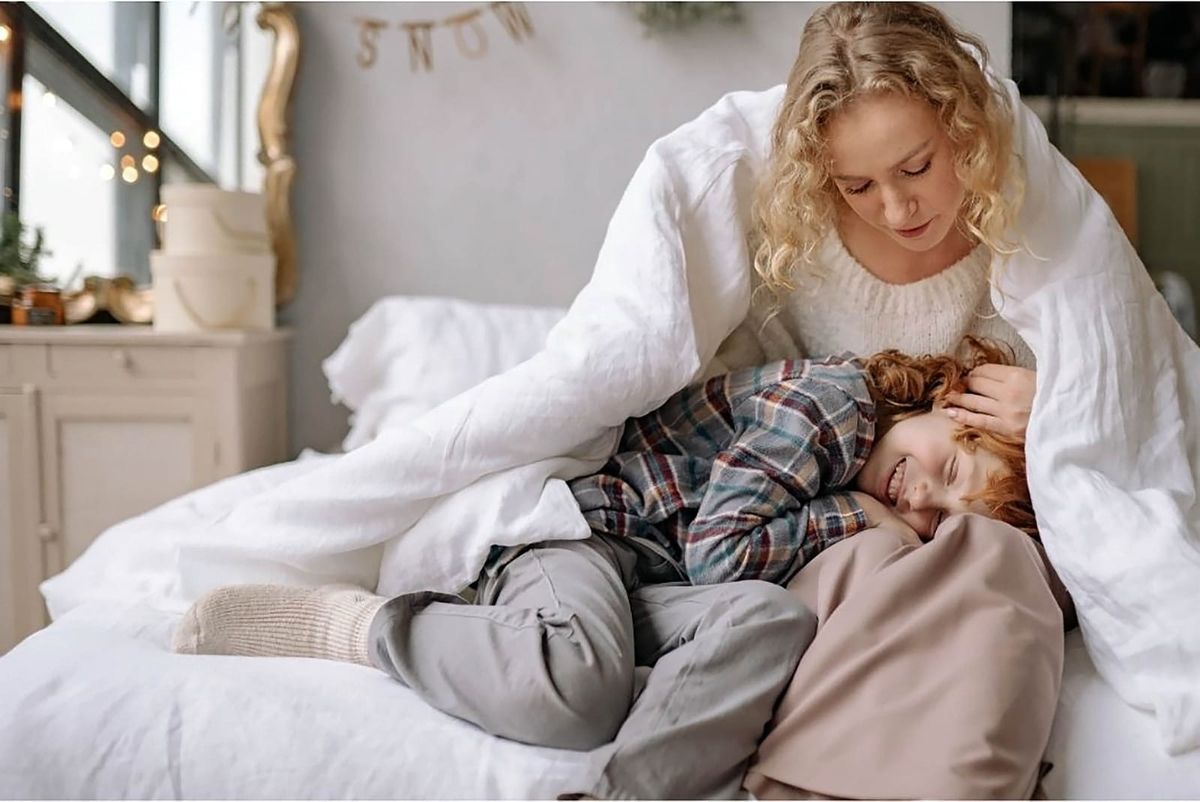
It is 8:25 on a busy Monday morning. Akeem's mother bends down at the preschool door, straightens his little backpack, and says gently, “Two kisses for now, and two more when I come back.” He clings to her leg. His eyes fill with tears. She points to his teacher, who is smiling and ready, then to the picture schedule on the wall: hang bag, wash hands, choose a table toy. The mother repeats the same words she used yesterday: “You are safe, your teacher will help you, and I will be back after story time and lunch.” One more hug. Two kisses. A wave at the window. Then she leaves.
It is a simple goodbye, but it is doing a great deal of important work.
In that moment, relationships, routines, and rituals are all woven together. The child is leaning on the security of a loving relationship. The familiar drop-off routine helps him know what comes next. The “two kisses now, two later” goodbye ritual adds warmth, meaning, and reassurance. What looks ordinary is powerful.
In early childhood, children grow best in environments where these three things work together. Relationships help children feel safe. Routines help children feel secure. Rituals help children feel connected and valued. When parents understand how these pieces fit, everyday family life becomes more than a schedule to survive. It becomes a foundation for emotional well-being.
Relationships come first because young children develop through connection. Before children can manage big feelings, cope with change, or confidently explore the world, they need to know that someone is there for them. They need to feel seen, comforted, and understood. A strong parent-child relationship does not eliminate every difficult moment, but it gives children a secure base from which to handle them.
That is why routines matter so much. A routine is the predictable way daily life happens: waking up, getting dressed, brushing teeth, mealtimes, bath time, bedtime, and saying goodbye at preschool. For adults, these can feel repetitive. For young children, they are reassuring. Predictability lowers anxiety because children begin to trust the shape of the day. They may not be able to tell time, but they do learn patterns. They know what usually happens next, and that knowledge helps them settle.1
Still, routines are only part of the picture. Rituals add something deeper. If routines are about structure, rituals are about meaning. A bedtime routine may include brushing teeth, putting on pyjamas, and turning off the light. But the bedtime ritual is the cuddle, the prayer, the song, or the whispered words, “I’m right here, and I love you.” A morning routine may include shoes, a coat, and a car seat. A morning ritual may be a silly goodbye handshake, two kisses, or a blessing spoken at the front door.
Rituals tell children, “This is who we are. This is how we love. This is what belongs to us.”
That is why rituals matter so much in early childhood. They create a sense of belonging. They help children feel part of a family story. They carry love across transitions. A child who hears the same comforting words at drop-off each day is not simply hearing a phrase. They are receiving a message of continuity: even when we are apart, our connection and love remain.
This is especially important during hard transitions such as preschool drop-off, bedtime, or moving between homes. In those moments, children are not only managing physical changes. They are often managing separation, uncertainty, fatigue, or emotions they cannot yet explain. A connected routine and a loving ritual can act like emotional bridges.
The preschool goodbye at the beginning of this post is a good example. The routine is predictable: arrive, greet the teacher, hang bag, wash hands, begin the day. The ritual is personal: two kisses now, two later. But neither works well without the relationship underneath. Akeem trusts the ritual because he trusts his mom. He also trusts the routine because it is carried out consistently and lovingly.
This is one reason experts often encourage parents to keep goodbyes calm, brief, and consistent. Long, anxious, or changing departures can make the separation feel bigger. A simple, loving, predictable goodbye helps the child borrow the adult’s calm until they can find their own.
Another recent study found that consistent child routines predicted several aspects of school readiness among preschool-aged children, including social-emotional functioning. In other words, routines are not just helpful for managing mornings; they are associated with broader readiness for learning and participation in school life.2
The encouraging news for parents is that none of this requires perfection. Children do not need extremely rigid routines or elaborate family traditions. They need repeated experiences of love and predictability. A ritual can be as simple as one phrase at bedtime, one song in the car, one blessing before meals, or one cuddle before separation. This is not about how impressive it is, but how reliably it communicates comfort, connection, and love.
It also helps to remember that every family can shape routines and rituals in ways that fit their real life. A single parent rushing to work, grandparents helping with care, a family managing shift work, or parents raising more than one young child may all create different patterns. That is okay. The goal is not to copy someone else’s family culture. The goal is to build rhythms that are realistic, repeatable, and meaningful in your own home.
So, when you think about your child’s day, look again at the ordinary moments: bedtime, goodbye at preschool, the snack after nursery, the bath before bed, the song before sleep. These are not small things to a young child. They are often the very places where healthy relationships, rituals, and emotional security are built.
Relationships give children the courage to let go. Routines give them the confidence to expect what comes next. Rituals reassure them that love stays with them through it all.
And sometimes, in the space between tears at the preschool door and a wave from the classroom window, that is exactly what helps a child begin to believe: I am safe, I am loved, and my parents will come back for me.
Notes
1. Mary Spagnola and Barbara H. Fiese, “Family Routines and Rituals: A Context for Development in the Lives of Young Children,” Infants and Young Children 20, no. 4 (2007): 284–299. The review concludes that naturally occurring family routines and meaningful rituals provide both predictable structure and an emotional climate that supports early development.
2. Lixin Ren, Courtney Boise, and Rebecca Y. M. Cheung, “Consistent routines matter: Child routines mediated the association between interparental functioning and school readiness,” Early Childhood Research Quarterly 61 (2022): 145–157. The study reported that consistent child routines predicted multiple aspects of school readiness, including children’s social-emotional functioning.