Creating a Home That Invites Children to Explore, Play, and Participate
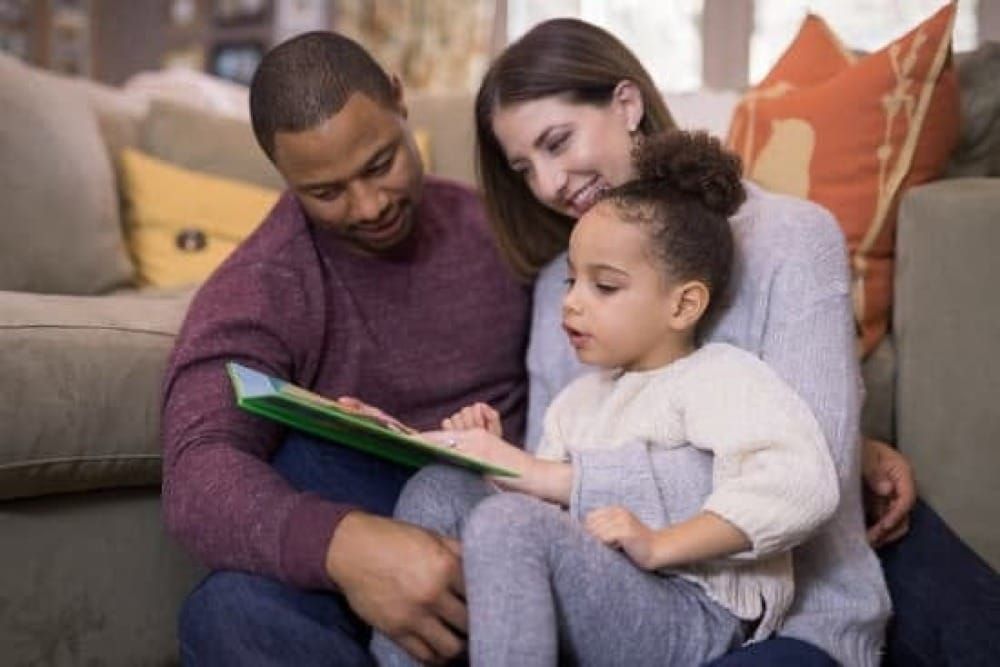
In the GREATEST Parenting Roadmap, E stands for Engagement and Expression. This part of the roadmap reminds us that young children do not grow only by being told what to do. They grow by touching, trying, talking, imagining, listening, moving, and participating in everyday life.
One of the most powerful learning tools your child will ever have is the ordinary home environment you create and the way you show up in it.
A home that invites engagement tells a child, in quiet, practical ways: You belong here. You can reach. You can choose. You can try. Your ideas matter.
Is Your Home Inviting Your Child to Participate?
For young children, engagement often begins with access. When every toy, book, or material is out of reach, children must wait for adults to start their play. But when a few safe, interesting, age-appropriate materials are placed at the child’s level, children can begin to make choices for themselves.
A toddler who pulls a book from a basket and brings it to you is not only asking for a story. He is initiating a connection. A preschooler who chooses blocks and begins to build is not only creating entertainment. The child is planning, balancing, testing, solving problems, being creative, and expressing ideas.
Low bookshelves with books, open bins with blocks, and small baskets with scarves and toy animals can make a big difference. They do not need to be fancy to invite a child into meaningful play and conversation.
Open-ended materials are especially valuable. Blocks, cardboard boxes, fabric scraps, playdough, empty containers, wooden spoons, leaves, rocks, sticks, and used pots and pans can become almost anything in a child’s imagination. These materials leave room for imagination.
Children Also Need Places to Pause
An engaging home is not only about busy play. Children also need quiet spaces to settle their bodies and emotions. A small cushion, a few books, and a calming sensory item, such as a soft toy, can help a child learn that rest is part of healthy living.
This quiet area should never feel like punishment. It should feel comfortable and say, You can take a break. You can stop for a while. Return when you are ready.
Safe Spaces for Exploration
Children need movement, noise, pretend play, and active exploration. If parents must constantly say, “Don’t touch that,” “Get down,” “Move away,” “Be careful,” or “You will break this,” both parent and child can become frustrated.
Safety does not remove the need for supervision, but it can reduce interruptions and stress. For babies, this may mean clear floor space for rolling, crawling, reaching, and pulling up. For toddlers, it may mean sturdy objects they can carry, stack, fill, dump, and rearrange. For preschoolers, it may mean a small table for drawing, a corner for building, or a pretend-play area with everyday household items.
When three-year-old Joan walked into the living room after breakfast, she saw many items within reach: blocks, a few books, toy animals, scarves, plastic bowls, and wooden spoons. She picked up a scarf and wrapped it around her teddy bear; the bowl became a bathtub, and the spoon became a toothbrush.
The space invited her to engage.
That is the power of a thoughtfully and intentionally arranged home environment that is safe, accessible, and open to possibilities for a child.
Parents, Your Role:
Once the environment invites engagement, the parent’s role becomes crucial. Parents can expand children’s ideas without taking over.
Three-year-old Asha picks up a lid, holds it to her face like a mirror, and announces, "I'm a princess with a shield." You laugh, bend down, and ask, "Oh! Why does the princess need a shield?"
Engagement begins with a simple question.
This is where many loving adults struggle. A child starts building a tower, and the adult quickly says, “Let me show you how to make it taller.” The intention is good. We want to help. But when adults lead too strongly, children may stop trusting their own ideas.
A better first step is to watch, pausing long enough to notice the child’s idea and to say, “You made a tall tower. It looks wobbly at the top. Can you fix it?”
Use comments that help build language naturally, as the words are connected to the child’s own actions. Your presence and gentle questions can stretch their thinking. Avoid quizzing with too many questions, such as “What colour is that? How many blocks? What shape is this?”
You can also offer a single small idea and then wait. If your child is building with blocks, you might say, “Maybe this block could be a tunnel.”
Then pause. That pause gives the child time to problem-solve and realise that, “This is still my play”.
Research supports this form of adult involvement. Guided play gives children a sense of choice and discovery, while adults support learning through thoughtful materials, prompts, and gentle guidance.¹ Research on responsive parenting also shows that warm adult responses support children’s social, emotional, communication, and cognitive growth.²
A home that invites engagement needs to be welcoming, safe, and responsive. It needs room for movement, imagination, conversation, and rest. Most of all, it needs adults who believe that a child’s ideas are worth noticing. These send a powerful message to the child:
Your world is worth exploring, and your ideas are worth growing.
Footnotes
1. Weisberg, D. S., Hirsh-Pasek, K., & Golinkoff, R. M. “Guided Play: Where Curricular Goals Meet a Playful Pedagogy.” Mind, Brain, and Education, 2013.
2. Landry, S. H., Smith, K. E., & Swank, P. R. “Responsive Parenting: Establishing Early Foundations for Social, Communication, and Independent Problem-Solving Skills.” Developmental Psychology, 2006.