Moving to Learn: Why Active Bodies Support Active Minds
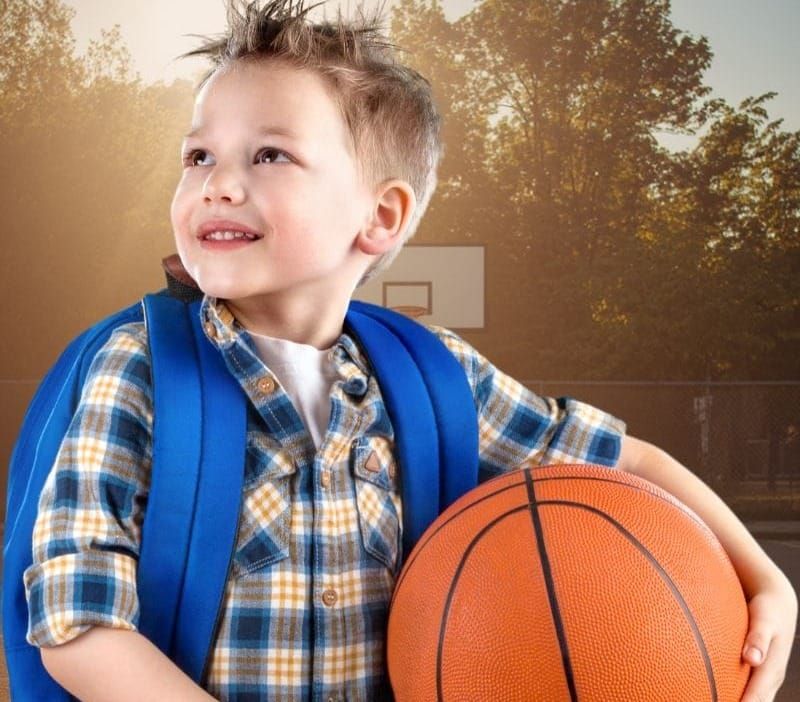
The phone rang, and I could hear the worry before my friend
even said hello. She was calling from her home on a Caribbean island and needed
my advice. Her eight-year-old son loved football and was preparing for an
end-of-year exam. As the exam approached, she wondered whether she should stop
him from playing so he could devote more time to studying.
Many parents believe that when examinations draw near, sport and play become distractions. Football boots are put aside, while the children are directed to sit for longer periods surrounded by books.
However, the better question may be: Will removing movement help this child learn, or will it take away something that helps him learn well?
What Research Suggests
Research increasingly shows that movement can support
children's thinking and learning. A 2023 systematic review by Latino and Tafuri
examined physical activity and academic performance among school-age children.
The authors concluded that physical activity may support cognitive functioning
and academic achievement through brain health, attention, emotional well-being,
and engagement.
A 2025 cluster randomised controlled trial by Martin
Martinez and colleagues studied 99 children aged three to six. During English
lessons, some children involved in light activity, others moderate-to-vigorous
activity, and a control group remained seated. After ten weeks, the physically
active groups showed greater benefits in vocabulary recall and verbal memory
than the control group. The more active group also gained additional fitness
benefits.
The message is not that football replaces revision. It is
that meaningful movement and learning do not always have to compete.
Children Learn with Their Entire Bodies
Children do not leave their bodies behind when they read,
calculate, remember, or solve problems. Movement can release restlessness and
help children return to a task with renewed attention.
Sport also gives children opportunities to practice
executive function skills. During a football game, a child must remember rules,
watch the ball, notice teammates, judge distance, control impulses, change
direction, and decide what to do next, often within seconds. The game is
physical, but it also requires planning, memory, attention, and flexible
thinking.
When More Sitting Produces Less Learning
Nine-year-old Daniel is preparing for a test. His mother
cancels outdoor play and asks him to study for two uninterrupted hours. After
30 minutes, he begins rocking his chair, staring through the window, and making
careless mistakes. She thinks he is being difficult, so she adds another
worksheet.
The following afternoon, she tries a different approach: 25
minutes of focused work, a five-minute movement break, and then another short
study period. Daniel stretches, runs to the gate and back, drinks water, and
returns. He completes more work with less tension.
The extra sitting had not automatically produced extra
learning. Daniel benefited from a balance of concentration, movement, and rest.
Should Sport Stop During Examination Time?
Parents usually do not have to choose between sport and
schoolwork. Instead, consider the child's complete routine.
Use movement as a planned study break. After a short period
of focused revision, allow the child to stretch, walk, dance, or play actively
before returning to the next task. Younger children may need breaks sooner than
older children.
Adjust the amount rather than removing the activity. During
a busy week, shorten a practice session instead of cancelling it. A brief
kickabout can provide exercise and enjoyment without taking over the afternoon.
Protect sleep and reasonable study time. Sports should not
leave a child exhausted, cause late bedtimes, or replace necessary revision.
The goal is balance, not an excuse to avoid schoolwork.
Protect joy and connection. A much-loved sport may also
provide friendships, confidence, routine, and relief from pressure. Removing it
completely can make examination preparation feel like punishment.
However, before deciding your action, ask:
· Is my child completing
a reasonable amount of revision?
· Does the activity
leave my child refreshed or exhausted?
· Is my child becoming
anxious, irritable, or discouraged?
· Should we reduce the
schedule instead of removing the activity?
The answer should suit the child, not simply the examination timetable.
Bring Movement into Learning
Movement can also become part of learning at home. A child
can toss a ball while spelling words, march while recalling multiplication
facts, act out vocabulary or story events, or move between question cards
placed around the room. Hopscotch games can be used to revise addition,
subtraction, and time.
These activities do not replace serious study. They make
practice more engaging for developing minds.
Try the Study-Move-Return Plan
For one week, create a routine with your child:
1. Choose one clear task, such as
reading two pages or completing five mathematics problems.
2. Work for 15 to 25 minutes,
depending on the child's age and attention span.
3. Take a five-minute movement and
water break.
4. Return for another short work
period.
5. End by asking, “What did you
learn, and what do you still need to work on?”
Observe whether movement improves mood, effort, or concentration, and adjust the timing as needed.
Football and Books Can Belong Together
This approach connects naturally with A: Active Learning
in the GREATEST Parenting Roadmap. Children learn by doing, exploring,
trying, adjusting, and trying again. Movement helps them participate fully in
that process.
My advice to my friend was not simply, “Let him play,” or “Make him study.” It was to protect both priorities through a sensible routine. A child preparing for an examination needs revision, but also sleep, nourishment, encouragement, and opportunities to move.
Sometimes the best preparation for another page of revision
is a short run, a stretch, a kick of the ball, and then a return to the books
with a calmer body and a mind ready to learn.
References
1. Latino, F., & Tafuri, F. (2023). Physical activity
and academic performance in school-age children: A systematic review. Sustainability, 15(8), 6616.
https://doi.org/10.3390/su15086616
2. Martínez, C., Zapico, A. G., Valenzuela, P. L., Mañas, A., & Martínez-de-Quel, O. (2025). The effect of active learning on cognitive performance and physical fitness in preschool children: The role of exercise intensity. Journal of Science and Medicine in Sport, 28(8), 645-652.
https://doi.org/10.1016/j.jsams.2025.03.004