Raising a Lifelong Learner: What Active Learning Looks Like from Toddlerhood to School Age
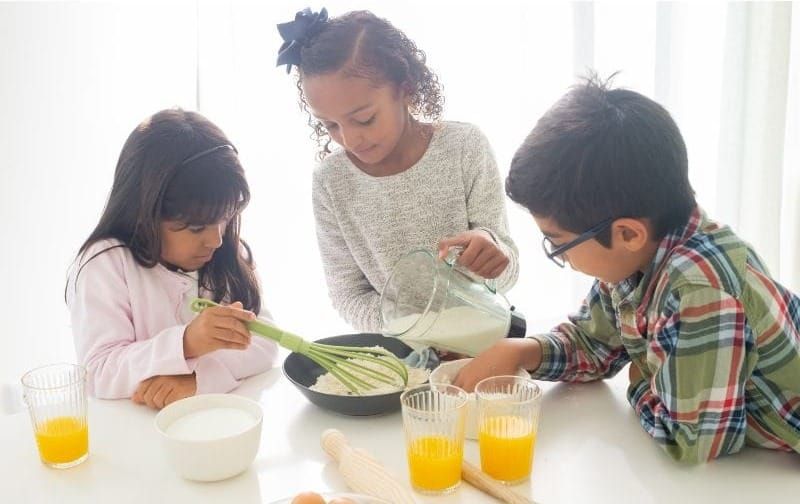
We often picture a lifelong learner as an adult who enjoys reading or developing new skills. Yet the foundation begins much earlier: when a toddler fills and empties a container, a preschooler asks “Why?” repeatedly, or a school-age child persists with a puzzle.
Throughout the A – Active Learning pillar of the GREATEST Parenting Roadmap, we have explored productive struggle, play, everyday science, movement, and mistakes as learning opportunities. This final post asks: What does active learning look like as a child grows?
Active learning happens when children move, question, experiment, imagine, solve problems, and try again. The activities change with age, but the process remains: “I notice. I wonder. I try. I learn.” Understanding each stage helps parents notice the learning already taking place at this early stage.
Toddlerhood (Ages 1–3): Learning with the Whole Body
“Let me do it!”
Toddlers learn through movement and their senses. They touch, carry, drop, push, climb, pour, stack, open, close, and repeat. Dropping a spoon repeatedly may look like misbehaviour, but the child may be investigating: Does it always fall? Does it make the same sound?
Active learning at this stage often looks slow, messy, and repetitive. Repetition helps the young brain build expectations about the world. Parents can offer safe objects and describe what the child is doing in age-appropriate terms.
A 2023 study involving toddlers aged 22 to 26 months compared active participation with observation. Both supported immediate learning, but the children remembered actions learned through active participation better when tested one year later.¹
Two-year-old Marcus spent a week opening and closing the same cabinet. His mother wanted to redirect him, but he was exploring cause and effect: the groundwork for sequences and patterns.
Invite your toddler into everyday tasks. Let your child push a foot into a shoe, carry a light item, stir with a spoon, or place clothes in a basket. These opportunities communicate, “You are capable.”
Preschool Years (Ages 3–5): Learning Through Imagination
“What will happen if…?”
During the preschool years, active learning looks less like repetition and more like invention. Children build, sort, mix colours, create stories, negotiate roles, and test ideas, developing language, social reasoning, memory, and problem-solving.
Four-year-old Amara ran a pretend restaurant in her living room. She scribbled a menu and invited her parents to be customers. They resisted correcting her “writing” or turning the game into a lesson. The play itself was the learning: taking turns, remembering orders, inventing prices, and solving disagreements.
This is guided play; the child has choice and an active role, while the adult gently extends the learning.
A 2022 review of 39 studies involving children ages one to eight found that guided play could support several learning outcomes and yield stronger results than free play or direct instruction, particularly in mathematics and vocabulary.²
Parents do not need to turn play into a formal lesson. One thoughtful question or well-timed hint may be enough.
Early School Age (Ages 5–8): Learning Through Purpose and Persistence
“Let me work it out.”
As children enter school, active learning becomes more complex. They plan projects, adapt rules, conduct experiments, write stories, and reflect on what worked. Yet homework, tests, and busy schedules can make learning feel like something to finish rather than explore.
Seven-year-old Daniel is trying to make a paper airplane fly. His grandmother knows a better design but pauses before taking over. She asks, “What do you notice about the wings?” Daniel adjusts one side, tests the plane, and watches it travel farther. He practises observation, persistence, and learning from feedback.
Parents can keep active learning alive by asking:
· “How did you decide?”
· “What else could you try?”
· “What did you learn?”
These questions show children that the learning process matters, not only the finished product.
What Children Need at Every Stage
Children benefit from time to explore, safe choices, hands-on materials, encouragement, permission to make mistakes, and adults who observe before stepping in.
When you wonder whether an activity “counts” as active learning, ask:
1. Is my child doing something rather than only watching?
2. Is there a choice, even a small one?
3. Is there room to make a mistake and try again?
Active learning does not require expensive toys, special classes, or a perfectly organised home. It can happen while washing vegetables, matching socks, caring for a plant, preparing a meal, building with boxes, or solving a family problem.
Try This: Follow the Curiosity
Choose an ordinary moment this week and let your child’s curiosity guide it. A toddler might transfer pegs between containers; a preschooler might test which objects float; a school-age child might measure ingredients for cookies.
Pause before giving instructions. Watch, listen, and ask one question that helps your child keep thinking. Afterwards, say, “Tell me what you discovered.” Wondering alongside your child shows that learning continues throughout life.
The Gift That Continues
A lifelong learner is not a child who always gets the right answer. It is a child who remains willing to ask, explore, struggle, revise, and try again.
When parents value curiosity over perfection and participation over speed, children learn to see themselves as capable thinkers. They also learn that mistakes provide useful information about what to try next.
As we close A – Active Learning, we move to the first T in the GREATEST Parenting Roadmap: Total Well-Being: Helping Children Thrive Through Healthy Habits.
References
1. Brezack, N., Pan, S., Chandler, J., & Woodward, A. L. (2023). Toddlers’ action learning and memory from active and observed instructions. Journal of Experimental Child Psychology, 232, 105670. https://doi.org/10.1016/j.jecp.2023.105670
2. Skene, K., O’Farrelly, C. M., Byrne, E. M., Kirby, N., Stevens, E. C., & Ramchandani, P. G. (2022). Can guidance during play enhance children’s learning and development in educational contexts? A systematic review and meta-analysis. Child Development, 93(4), 1162–1180. https://doi.org/10.1111/cdev.13730