Sleep Is Not a Luxury: Why Rest Matters in Early Childhood
T – Total Well-Being | The GREATEST Parenting Roadmap
It is 6:15 p.m. and Moira, age three, is clearly tired, but instead of slowing down, she becomes more active. One minute she is rubbing her eyes. The next, she runs around the room and bursts into tears because she cannot find her doll.
When Tired Does Not Look Tired
Adults often become quiet when exhausted. Young children may do the opposite.
A tired child may become unusually active, irritable, clingy, tearful or uncooperative. They may also find it harder to listen and concentrate.
Moira has had three nights of late bedtimes, a missed nap and a new baby bother waking the household at odd hours. It would be easy to label her behaviour as naughty. But she may simply be exhausted.
Four-year-old Jayden has a similar reaction. Around 7:30 each evening, he begins jumping on the sofa and refusing to brush his teeth. His mother assumes he is “fighting bedtime.” She starts his bedtime routine 30 minutes earlier. Within a week, the battles become shorter. Jayden was not necessarily asking for more playtime. His behaviour may have been saying, “I am overtired and need help slowing down.”
What Happens While Children Sleep?
Sleep is not wasted time or a luxury you can squeeze in after everything else. Under T – Total Well-Being, healthy sleep deserves the same attention as nutrition, movement, connection and emotional security.
A sleeping child may look still, but the brain and body are busy. Sleep helps the brain organise what children experienced and learned during the day. It supports memory, attention, language and thinking skills. Sleep also helps children regulate emotions and gives the body time for restorative processes that support growth and healthy immune functioning.
Research gives us a useful picture. Cai and colleagues (2023) followed children’s sleep patterns from infancy into early childhood. They found that longer and more consistent night and total sleep were associated with better cognitive and language outcomes at ages two and four-and-a-half.
Godzik and colleagues (2024) studied children ages three to five. When a child’s sleep quality worsened, emotional self-regulation also tended to decline. Simply put: a tired brain may have a harder time managing big feelings.
A Sleep Snapshot by Age
Sleep needs change as children grow. The American Academy of Sleep Medicine recommends these general ranges within a 24-hour period:
- Infants 4–12 months: 12–16 hours, including naps.
- Children 1–2 years: 11–14 hours, including naps.
- Children 3–5 years: 10–13 hours, including naps.
- Children 6–12 years: 9–12 hours.
For babies younger than four months, sleep patterns vary considerably, so there is no single recommended range.
These numbers are guides, not a test. Look at both the clock and the child. Is your child waking reasonably refreshed and alert enough to play and learn? The goal is to build healthy habits before poor sleep starts affecting daily life.
Bedtime Battles: Build a Routine That Sticks
Young children often resist stopping something enjoyable, even when tired. A predictable routine signals that the day is ending.
The routine can be simple:
Bath or wash-up → pyjamas → quiet conversation → story → prayer or song → cuddle → lights out.
What matters most is a calming, consistent sequence.
Try this simple Wind-Down Challenge for one week. Choose two or three calm activities, perhaps dimming the lights, reading one or two stories, saying a prayer or sharing a short cuddle, and do them in the same order at about the same time each night. Predictability is the point. It helps tell a child’s body, “Sleep is coming.”
For an infant, this may be a dim room and a consistent feeding-and-sleep routine. For a seven-year-old, it might be a five-minute chat before lights out. The details change with age, but the calm pattern remains important.
Screens, Naps and Sleep
Stimulating programmes, games and light from digital devices may make winding down more difficult. The American Academy of Paediatrics recommends turning screens off at least one hour before bedtime.
Naps, however, are not the enemy. Babies and many toddlers and preschoolers still need daytime sleep. A nap that is very late, very long or inconsistent may make bedtime more difficult for some children. Watch your child’s pattern and make gradual adjustments rather than abruptly removing needed rest.
Connection Before Sleep
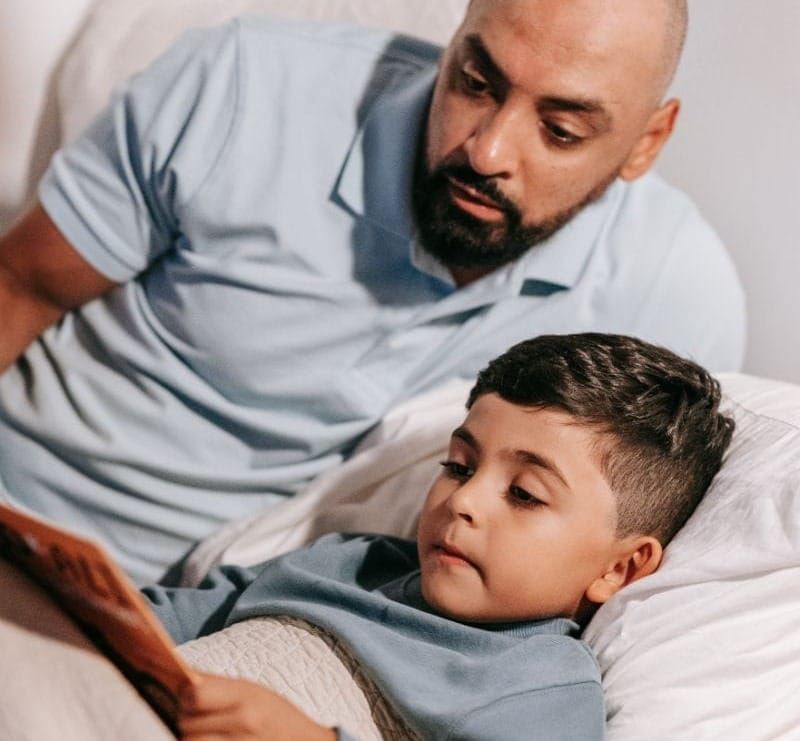
Bedtime is more than a health routine. It can also be relationship time. A story, prayer, song, cuddle or a few quiet minutes together can tell a child:
“You are safe. I am here. It is time to rest.”
This is where T – Total Well-Being meets R – Relationship & Routine in the GREATEST Roadmap. Good sleep habits are not about forcing children to switch off on command. They are about helping young bodies and brains move from activity to calm with loving, predictable support.
Sleep will not solve every behaviour or learning difficulty. Discuss persistent snoring, breathing problems, extreme daytime sleepiness, or ongoing sleep difficulties with a paediatrician.
When we protect children’s sleep, we are not taking time away from development. We are supporting development.
Tonight, perhaps the question is not simply, “How can I get my child to bed?” It may be:
“How can I help my child feel safe, calm and ready to rest?”
References
Cai, S., et al. (2023). Trajectories of reported sleep duration associated with early childhood cognitive development. Sleep, 46(2), zsac264.
Godzik, C. M., Carlson, D. D., Pashchenko, O. I., Ballarino, G. A., & Emond, J. A. (2024). Within-child associations between sleep quality and emotional self-regulation over 6 months among preschool-aged children. Frontiers in Sleep, 3, 1420245.
American Academy of Sleep Medicine. Child Sleep Duration Health Advisory.
American Academy of Pediatrics. Healthy Sleep Habits: How Many Hours Does Your Child Need? HealthyChildren.org.