What Is Your Child Telling You When a Familiar Routine Suddenly Falls Apart?
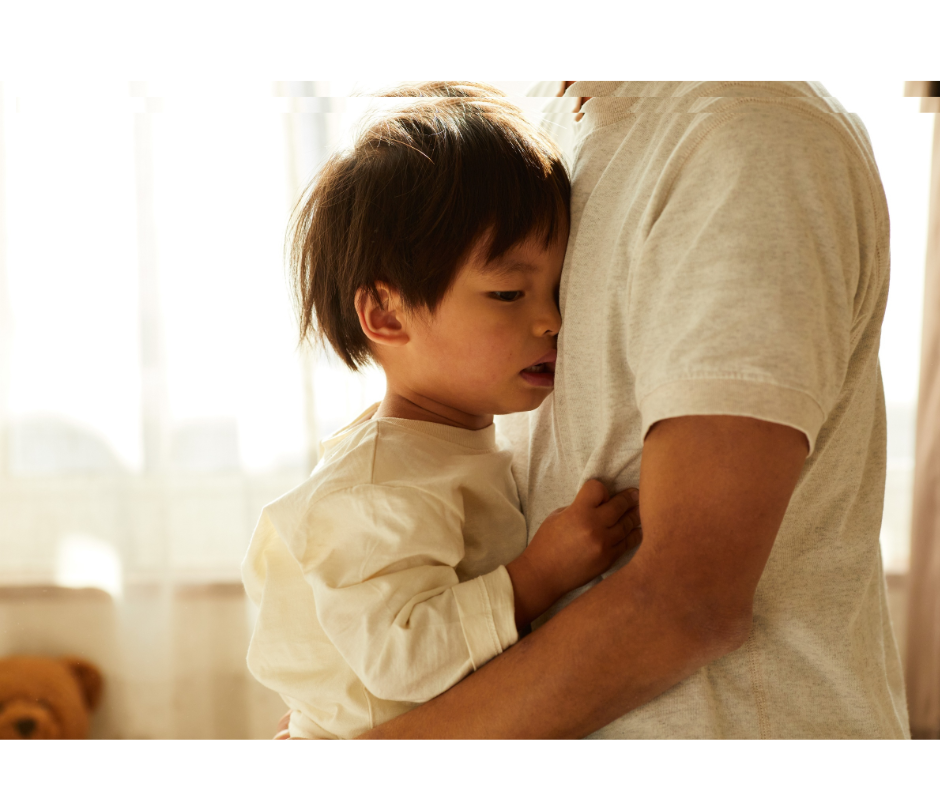
It is 7:45 p.m. You have done the bath, the pyjamas, the story, and the cuddle. Then you dim the lights. This bedtime routine has worked with three-year-old Akeem for months.
And then suddenly, it does not.
Akeem refuses to brush his teeth. He twists away when you try to help. He asks for one more drink, one more story, one more trip to the toilet. Then come the tears. Then comes your shouting. Then he collapses on the floor.
You gasp and wonder, “What just happened?”
If you have ever had a moment like this, you are not alone. One of the hardest things about parenting is that a routine can feel settled one week and completely unravel the next. When that happens, it is easy to think, “My child is being difficult,” or “I must be doing something wrong.”
But often, when a routine stops working, your child is not trying to make life hard for you. They may be telling you something they do not yet have the words to say.
Behaviour Is Communication
Young children communicate through behaviour long before they can explain themselves clearly. A child who suddenly resists bedtime, mealtimes, getting dressed, or leaving the house may be showing us that something feels hard, overwhelming, uncertain, or out of balance.
That does not mean we ignore their behaviour. It means we get curious about it.
Sometimes the message is: I am tired.
Sometimes it is: I need more connection.
Sometimes it is: Today took too much out of me.
Sometimes it is simply: I cannot hold myself together any longer.
Why Children Save Their Biggest Feelings for Home
This is one reason children often save their biggest feelings for home. A child may behave well all day at nursery or school and then unravel the moment they are back with you. That can be confusing, especially when someone else says, “They were absolutely fine for us.”
But home is often where children feel safest. It is where they let the strain show.
Why Children Need Both Routine and Relationship
This is why routines matter so much. Good routines are not about running a perfect household or making children obedient. They are about giving children a dependable structure to the day. Predictable routines reduce the number of surprises children have to manage. They help children know what comes next. Over time, that sense of predictability can support better sleep, smoother transitions, and a greater feeling of security.¹
Still, routines do not work in isolation.
A routine without relationship can become rigid. A relationship without routine can become exhausting.
Children need both.
They need the safety of knowing what usually happens, and they need the reassurance that when they wobble, someone steady is with them.
Pause Before You Push Harder
So, what can you do when a familiar routine suddenly stops working?
Start by pausing before you push harder.
That does not mean giving in to everything. It means noticing before reacting. Ask yourself: What might my child be experiencing right now? Are they overtired? Hungry? Needing reassurance? Struggling with a recent change? Carrying feelings from earlier in the day?
Then ask a second question: What am I bringing into this moment?
This matters too. By the end of the day, parents may be carrying stress, guilt, frustration, or simply a desperate need for a little peace. That is human. But stress can make it harder for us to stay warm, calm, and responsive, even when we love our children deeply. Research suggests that children’s sense of security in the parent-child relationship is shaped not only by what parents believe but also by the level of stress they carry.²
In other words, if bedtime is going badly, the problem is not always “the child” or “the routine.” Sometimes it is the strain in the whole moment.
That is why a gentle reset often works better than a power struggle.
You might say:
“I can see bedtime feels hard tonight.”
“You did not want the day to end.”
“You are upset. I am here.”
“Let’s take one deep breath together, and then I will help you with the next step.”
These simple responses do something powerful. They help your child feel understood while keeping the boundary in place.
You are not abandoning the routine. You are strengthening it through relationship.
Sometimes a routine needs adjusting too. Children change. What worked at two may not work at four. A child who used to skip happily to bed may now need ten minutes of reconnection after a busy day. Another may need a visual reminder of each bedtime step. Another may need less rushing and more transition time.
When a routine keeps breaking down, look for patterns.
Does it happen at the same time each day?
After busy days?
After a longer-than-usual separation?
At times when your child is very tired?
When you feel tense and stressed?
Patterns often tell the story.
And here is something many parents need to hear: a rough evening does not mean you are failing. It means you and your child are having a hard moment. That is quite different from being a bad parent or having a bad child.
Routines Can Become Places of Safety
Sometimes, the most helpful parenting move is not to make the routine stricter. It is to make the relationship more visible within the routine.
A hand on the shoulder.
A warm voice.
A playful nudge.
A predictable phrase.
A short cuddle before lights out.
A calm repair if things have already gone wrong.
These things may look small, but they are not small to a child.
So, the next time a routine falls apart, try not to see only the resistance. Listen to the message underneath it.
Your child may be saying:
I am tired.
I am confused.
I need help pulling myself back together.
I need your calm because I cannot find mine yet.
And when we respond with both consistency and connection, routines stop being just a schedule.
They become a place of safety.
Footnotes
1. Spagnola, M., and Fiese, B. H. “Family Routines and Rituals: A Context for Development in the Lives of Young Children.” Infants & Young Children 20, no. 4 (2007): 284–299. See also Mindell, J. A., et al. “Bedtime Routines for Young Children: A Dose-Dependent Association with Sleep Outcomes.” Sleep 38, no. 5 (2015): 717–722.
2. Halberstadt, A. G., et al. “Parents’ Beliefs About Children’s Emotions and Children’s Feelings of Security in the Parent–Child Relationship: A Study of the Mediating Role of Parental Stress.” Attachment & Human Development 13, no. 3 (2011): 269–290.