“Let Me Try!”: Everyday Tasks Build Independence
E – Encouraging Independence & Resilience | The GREATEST Parenting Roadmap
Have you ever caught yourself doing something for your child simply because it was quicker?
You button a shirt, feed a toddler who is eating slowly, or pack a schoolbag so everyone can leave on time. Most parents have been there!
Yet each time we allow children to attempt something they are ready for, we offer a chance to practise, solve problems, build confidence and independence.
In our previous post, “You Choose,” we explored how simple choices encourage independence. Now let us consider another step: allowing children to do things for themselves and contribute to family life.
Small Tasks, Big Learning Opportunities
Children learn to dress, use utensils, tidy toys, and care for belongings through watching, guidance, and practice. Pulling up trousers takes coordination and patience. Putting toys away involves remembering instructions and finishing a task.
These activities build responsibility, problem-solving, and persistence. The question is not only, “How old is my child?” but also, “What is my child ready to try?”
What Can Children Try at Different Ages?
Every child develops at their own pace. These examples are possibilities, not deadlines:
• Young toddlers (1–2 years): Try using a spoon, drinking from a cup, removing socks, placing toys in a basket, and wiping small spills with help.
• Older toddlers (2–3 years): Pull up trousers, put dirty clothes in a basket, wash hands with help, and toileting routines when ready.
• Preschoolers (3–5 years): Practise dressing, putting on shoes, tidying toys, carrying belongings, and helping pack a schoolbag.
• Early school-age children (5–8 years): Organise school materials, make beds, sort laundry, and prepare simple snacks with supervision.
Some children need extra time, more guidance, or adapted equipment. The goal is progress, not perfection.
Little Hands Want to Do It Themselves
Four-year-old Amara struggles to put on her shirt. Her mother notices her frustration but does not take over.
“Let us find the front of your shirt. Can you push your arm through this sleeve?” she asks.
Amara tries again and succeeds. “You kept trying, even when it was difficult!” her mother says. Amara beams with pride.
Her mother offered just enough help for Amara to succeed. Each small success builds confidence.
Helping at Home Builds Belonging
Independence also means learning to contribute. Children deserve to feel, “I am an important member of this family, and I can help.”
A toddler might place napkins on the table. A preschooler could water a plant or match socks. An older child might help prepare a meal or organise groceries. Choose tasks that are safe, manageable, and shared fairly. A child’s contribution need not be perfect; what matters is having a genuine role. Younger children may complete just one part of a job, and that is enough to begin.
Six-year-old Daniel enjoys setting the dinner table. One evening, he forgets the spoons. Instead of correcting him, his father asks, “Look at the table. Is anything missing?”
“The spoons!” Daniel exclaims. His father smiles: “You worked that out yourself!”
Daniel is learning to notice what needs to be done and not simply waiting for instructions. Such tasks nurture responsibility, cooperation and independence.
Helping Too Much Gets in the Way
We naturally want to spare children frustration. But when we always take over, we can unintentionally remove valuable chances to learn.
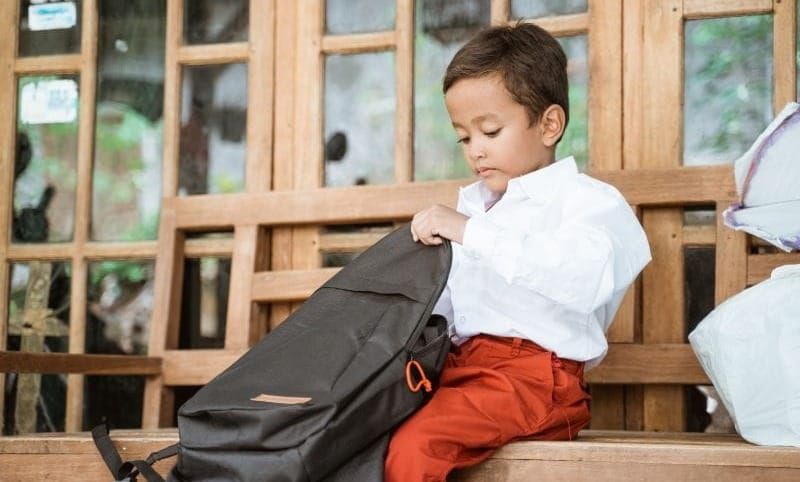
Imagine a child struggling to zip a schoolbag. Instead of doing it, we might say:
“Would you like to try again?”
“What do you think might help?”
“Shall I hold the bag while you pull the zip?”
This is called scaffolding: giving just enough support, then gradually stepping back. Example: offering a hint and letting the child finish.
Stepping back never means ignoring distress or safety concerns. Children should know that help remains available.
What Does Research Tell Us?
In a 2022 study, Tepper and colleagues gathered reports from parents of 207 children aged 5–13. Children who participated more often in self-care and family chores tended to do better at remembering information and controlling impulses. The study found a link, not proof, that chores develop these skills.
Wang and Gai (2024) studied eighty-four three-year-olds. They found that supportive parenting, including opportunities for independence, and children's developing self-control influenced each other over time.
Both studies support a practical message: provide opportunities to try, alongside warm guidance.
Give Them Time, Space and Encouragement
Independence takes patience. A child may need ten minutes for a task an adult can finish in two. When possible, allow more time. Keep belongings within reach, offer child-friendly materials, and give simple reminders.
Notice effort rather than praising only the result. Try saying:
“You remembered where your shoes belong!”
“You tried another way when that didn't work.”
“Thank you for helping our family.”
True independence is not doing everything alone; it is growing more capable with appropriate support.
Your GREATEST Challenge This Week
Choose one task your child is ready to practise: feeding, dressing, tidying toys, packing belongings, or helping at home. Show how, practise together, and gradually reduce your help.
Allow mistakes. Celebrate effort. Resist taking over too quickly.
At week's end, ask yourself: What can my child attempt now that I previously did?
Small Steps Today, Greater Confidence Tomorrow
Our role changes gradually: from doing things for children, to doing things with them, to watching proudly as they do more for themselves. Throughout, we remain a safe, loving source of guidance.
Every small chance to try is a step towards independence, confidence, and resilience.
References
Tepper, D. L., Howell, T. J., & Bennett, P. C. (2022). Executive functions and household chores: Does engagement in chores predict children's cognition? Australian Occupational Therapy Journal, 69(5), 585–598. https://doi.org/10.1111/1440-1630.12822
Wang, S., & Gai, X. (2024). Bidirectional relationship between positive parenting behavior and children's self-regulation: A three-wave longitudinal study. Behavioral Sciences, 14(1), Article 38. https://doi.org/10.3390/bs14010038