“You Choose!”: How Simple Choices Build Independence
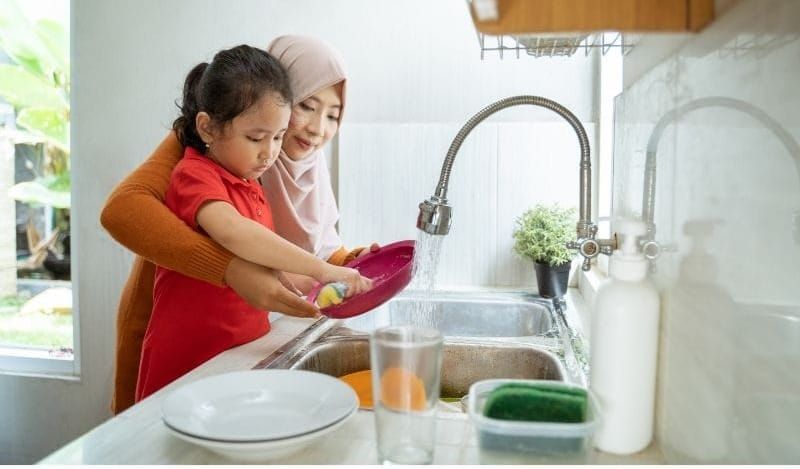
“Which fruit would you like for your snack, banana or mango?”
It sounds like a small question. But when a child pauses, thinks, and answers, something important happens: the child makes a decision.
In our first post on Encouraging Independence & Resilience, we explored why children need opportunities to try things by themselves. Now we take the next step: helping them make age-appropriate choices and gradually accept responsibility.
Healthy independence does not mean leaving children to manage on their own. It means offering guidance while giving them room to grow.
Independence Should Grow with the Child
Sometimes we expect too much too soon. At other times, we keep doing things children are ready to attempt. The better question is: “What can my child reasonably try now, with a little help if needed?”
Children develop at different rates. Their abilities, temperament, experiences, disabilities, family routines, and culture all matter. The following examples are guides, not tests.
Toddlerhood: “Me Do It!”
Toddlers often want to do more than their developing skills allow. Let them practise simple tasks, even when the result is imperfect.
They might:
- Choose between two shirts, snacks, or books.
- Put toys into a basket.
- Carry an unbreakable cup to the table.
- Try feeding themselves.
- Help pull on clothes or wash their hands.
Rather than ask, “What do you want for breakfast?” offer two suitable choices: “Would you like banana or pawpaw with your cereal?”
The adult decides what is available; the child experiences the satisfaction of choosing. This is an early step towards autonomy, or learning to act with growing independence.
Preschool Years: “I Can Do It Myself”
From about three to five years, children can often take on more everyday tasks. With support, they may dress themselves, put away toys, set the table, pour a little water, help prepare food, or choose a play activity.
Encourage their thinking with questions such as “What should you do first?” and “Would you like to try before I help?”
A 2022 study of preschool children found that parents offering choices was linked with stronger executive-function skills. These are the thinking skills children use to remember instructions, manage impulses, plan, and adjust their actions.¹ The study found a connection, not proof that giving choices alone caused the improvement.
April Chooses Her Clothes
Four-year-old April is visiting her grandmother. Her mother selects two comfortable, suitable outfits and asks, “Would you like the flower dress or the shorts and green top?”
April picks the shorts. Her mother prefers the dress but respects her decision. April beams with pride: “I chose it!”
Allowing a child to choose differently from us, when both options are acceptable, shows that their opinion matters.
Early School Years: Growing Responsibility
Between about five and eight years, many children can gradually take responsibility for parts of their daily routines. They might pack their school bag, make their bed, prepare a simple snack, clear dishes, care for belongings, or remember a regular chore.
They still need reminders and supervision, but adults need not direct every step.
Instead of “Brush your teeth now,” try: “You need to brush your teeth and put away your book before bed. Which will you do first?”
The rule stays the same; the child decides the order.
Choice Does Not Mean Children Are in Charge
Adults remain responsible for safety, health, and necessary boundaries. Children should not decide whether to use a car seat, take prescribed medicine, or cross a busy road alone.
Yet we can offer choices within firm limits: “Would you like to hold my hand or Daddy’s hand while we cross?”
Be careful about offering too many options. A three-year-old facing a wardrobe full of clothes may feel overwhelmed. “Red shirt or yellow shirt?” is easier. As children's skills develop, the range of choices can grow.
Jordan Packs His Bag
Seven-year-old Jordan’s father usually packs his school bag. One evening he says, “You pack it, and I’ll check it with you.”
Jordan forgets his water bottle. Rather than scold him, his father asks, “What could help you remember tomorrow?”
“A checklist!” Jordan suggests.
One small mistake becomes a chance to solve a problem and build responsibility.
When mistakes are safe, resist rushing in to fix everything. Ask what your child might try next. Give their ideas a hearing, even when you could solve the problem faster.
Guide Without Taking Over
A 2024 study tested a programme helping parents guide children during play without taking over. Parents became more supportive of children’s independence. There were promising, but not statistically conclusive, improvements in children’s self-regulation.²
The lesson for everyday parenting is simple: offer help when needed, but give children time to think, practise, and recover from mistakes.
Sometimes the best words are: “Try it. I’m right here if you need me.”
Your GREATEST Challenge This Week
Choose one task you usually do for your child. Could they manage all or part of it? Perhaps they could choose their clothes, put toys away, pack part of a school bag, or decide which job to tackle first.
Offer a suitable choice, allow extra time, and notice their effort: “You worked that out!” or “You remembered by yourself!”
Little choices prepare children for bigger decisions. Little responsibilities build confidence for bigger challenges. Each opportunity to say “I choose,” “I’ll try,” or “I can do this” helps children become more capable, confident, and resilient.
References
1. Castelo, R. J., Meuwissen, A. S., Distefano, R., McClelland, M. M., Galinsky, E., Zelazo, P. D., & Carlson, S. M. (2022). Parent provision of choice is a key component of autonomy support in predicting child executive function skills. Frontiers in Psychology, 12, 773492. https://doi.org/10.3389/fpsyg.2021.773492
2. Day, N., Paas, F., Kervin, L., Bokosmaty, S., & Howard, S. J. (2024). Effect of the Partners in Play intervention on parents’ autonomy-supportive guiding behaviour and children’s self-regulation. Brain Sciences, 14(9), 924. https://doi.org/10.3390/brainsci14090924