Why E Comes After R: Helping Young Children Move from Security to Expression
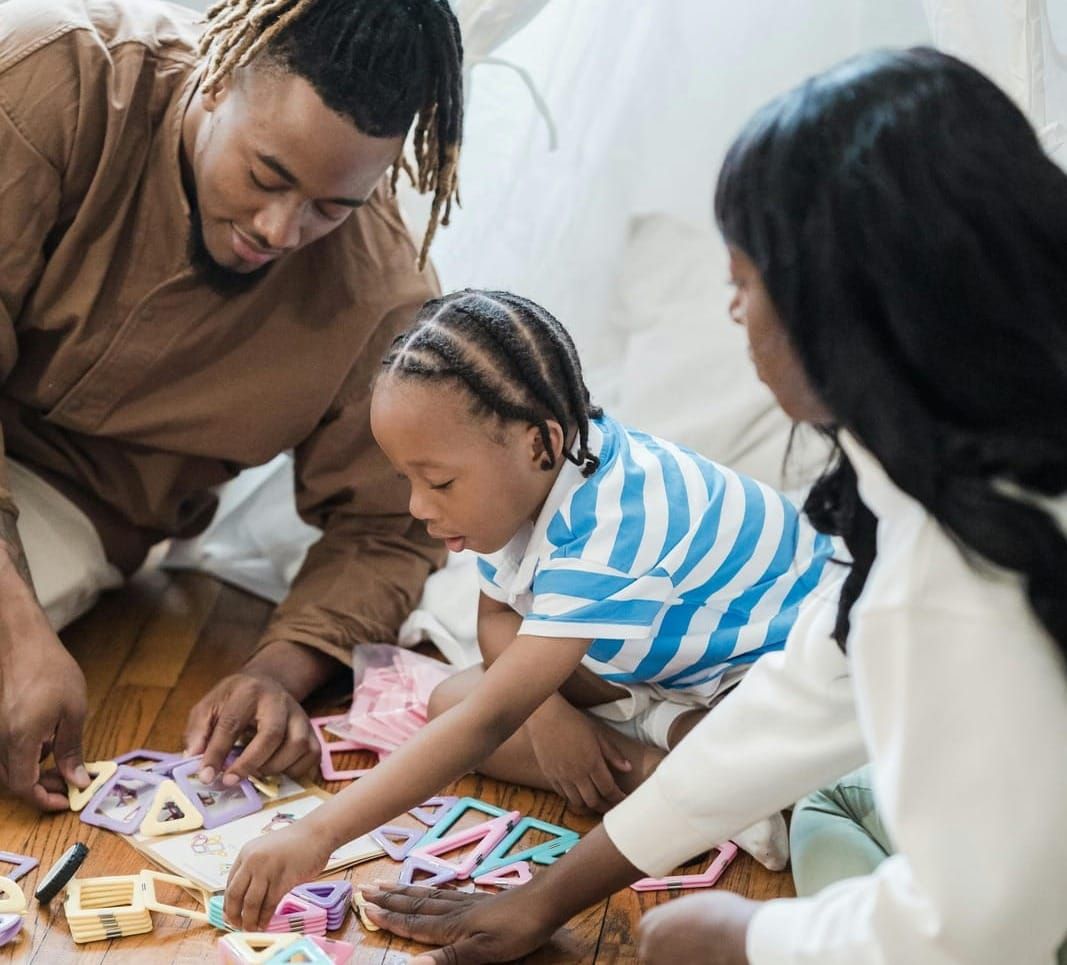
You have been working hard to build a strong relationship and a predictable routine with your three-year-old. Morning cuddles, consistent mealtimes, bedtime stories, and gentle transitions are becoming part of your family's rhythm. Then, slowly, something even more beautiful begins to shift.
Your child starts talking more, not just asking for snacks, but also telling you about dreams, acting out stories with stuffed animals, or announcing, “I’m sad because my friend didn’t play with me today.”
That is Engagement and Expression unfolding in real time.
In the GREATEST Roadmap for purposeful parenting, we have already explored G – Growth, which reminds us that children learn and develop through play, exploration, movement, imagination, and curiosity. We have also explored R – Relationship and Routine, which reminds us that children thrive when they feel safe, loved, and able to anticipate what comes next.
Now comes E, which stands for Engagement and Expression. These are two powerful developmental abilities that develop best when children feel secure and connected.
What Do Engagement and Expression Mean?
Engagement is how children actively participate in their world. It shows up in back-and-forth conversations, curious questions, pretend play, and problem-solving, as well as in the way a child leans in during story time or wants to “help” make dinner, even when the job takes three times as long.
Engagement is more than keeping a child busy. It is a child’s active involvement with people, materials, ideas, songs, routines, stories, and play. An engaged child pays attention, experiments, joins in, wonders, imitates, creates, and sometimes concentrates deeply.
Expression is how children show what is happening inside them, their thoughts, feelings, needs, fears, and ideas. Children express themselves through words, gestures, facial expressions, movement, pretend play, drawing, crying, laughing, storytelling, silence, and even challenging behaviour.
In early childhood, expression is not limited to language. A toddler who throws a toy may be saying, “I’m frustrated.” A preschooler who hides under the table may be saying, “This feels like too much.” A child who repeats the same question may be saying, “I need assurance.”
This is why Engagement and Expression do not appear out of nowhere. They grow from the trust you have already built through warm relationships and dependable routines.
When a child feels secure, they feel freer to explore, speak up, ask questions, try new things, and even fall apart safely. The R stage creates the garden; the E stage is when things begin to bloom.
Why Must E Come After R?
Children are more likely to engage with the world and express what they think and feel when they first feel safe within their relationships.
A child who feels connected is more willing to try. A child who trusts the adults around them is more likely to communicate. A child who experiences a steady rhythm to the day can devote more energy to learning, talking, problem-solving, and emotional growth.
Consider three-year-old Maya entering her classroom while holding tightly to her father’s hand. She loves the block area, but this morning she does not move toward it.
Her teacher kneels and says, “Good morning, Maya. You look like you need a little time.” Maya leans into her father. The teacher does not rush her. Instead, she gently says, “First we put your bag away, then you can wave to Daddy from the window, and after that I’ll sit with you near the blocks.”
A few minutes later, Maya is stacking blocks. Soon, she says, “I’m making a tall house. It might fall!”
That small sentence marks a significant developmental step. Maya moved from security to engagement, and then to expression.
This is the natural progression: security leads to confidence, confidence to curiosity, and curiosity to expression.
From a child’s perspective, this makes sense. A child who does not feel safe may be reluctant to show what they truly feel. A child without predictable routines may expend much of their energy trying to work out what will happen next. But when those foundations are in place, children become more ready to participate, communicate, and reveal who they are.
The movement from R to E is really the movement from:
“I am safe with you” to “I can show you who I am.”
What Research Tells Us
Recent research supports the connection between relationships, emotional development, and communication. One study published in Child Development found that parent-child conversations about emotions were linked with children’s later emotion knowledge. When adults ask questions, talk about feelings, and give children room to respond, children gradually develop a stronger understanding of emotional experiences.¹
This matters because young children are not born knowing how to say, “I’m disappointed because you gave the blue cup to my brother.” They learn these skills through repeated, warm, patient exchanges. First, we lend them our calm. Then we lend them our words. Eventually, they begin to use those words themselves.
Another study found that when parents were distracted by digital or non-digital tasks, parent-child communication was affected. Parents spoke and gestured less, which reduced children’s opportunities for rich language interaction.²
This does not mean that a parent must be perfectly available daily. No parent can do that. But it does remind us that engagement grows in ordinary shared moments: looking together, talking together, playing together, waiting together, exploring together, and noticing together.
Simple Ways to Foster Engagement and Expression
· Build the connection before giving instructions. Instead of saying, “Clean up the crayons,” try saying, “You worked hard on that picture. Now it’s time to put the crayons back.” Connection often makes limits easier to accept.
· Invite expressions in many forms. Some children talk easily, while others show you through pretend play, drawing, movement, or quiet observation. A child who is not ready to say, “I missed Mommy,” may rock a baby doll and whisper, “Don’t go.” That is an expression, too.
· Ask open-ended questions. Instead of “Did you have a good day?” try, “What was the silliest thing that happened today?”
· Name emotions without shaming. “You’re angry that playtime is over” is different from “Stop making a fuss.” Over time, children learn that feelings are not dangerous; they are messages.
· Follow their interests. If your child wants to narrate an entire pretend play story, listen. If they are fascinated by ants on the sidewalk, pause and wonder aloud: “Where do you think they are going?”
· Read books with emotional themes and pause to ask how the characters might be feeling.
· Listen beneath the behaviour. When children melt down, cling, grab, or shout, they may be expressing something they cannot yet articulate. You can set boundaries while still offering understanding: “I won’t let you hit. You wanted a turn and didn’t know what to do.”
Finally
As we begin exploring E in the GREATEST Roadmap, let us remember this: before children can fully speak their hearts, they need to know that someone is listening.
Every time they look at you to share something, they are saying:
“I trust you enough to let you in.”
Footnotes
1. A 2023 Child Development study found links between parent-child emotion conversations and children’s developing emotion knowledge.
2. A 2024 Frontiers study found that parental distraction can reduce parent-child speech and gestures during interaction.