Every Child Has a Voice: Helping Shy and Expressive Children Communicate
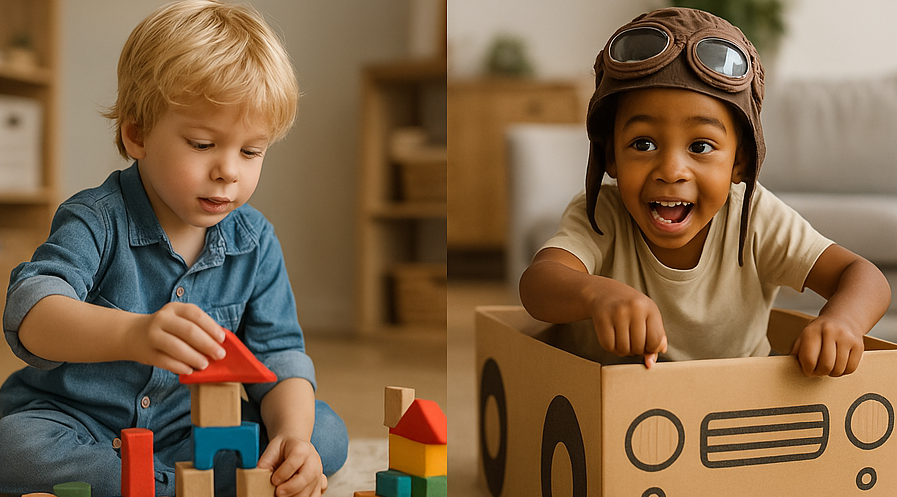
Some children enter a room talking, asking questions, telling stories, and announcing their needs. Others enter quietly, watching from behind a parent’s leg. They may know what they want to say, but they need more time, trust, or a gentler invitation before their words come out.
Two four-year-olds are saying goodbye after a party. Janet hides partly behind her mother, not quite ready to wave. Joan stands in the middle of the room and announces, loudly, that she is going home.
Both children are communicating. One uses words, gestures, and big feelings. The other uses silence, facial expression, and body language. Our job is not to force children into one “right” way of expressing themselves, but to help all children use their voice with confidence, kindness, and respect.
In early childhood, communication is still developing. Children are learning to name feelings, ask for help, wait for a turn, listen, and cope when the answer is “not right now.” That is a lot of learning for little people.
The Quiet Child: “I Need Time Before I Speak”
Some children are naturally slow to warm up. They watch before joining, think before speaking, and need to feel safe before opening up. A quiet child is not necessarily unhappy, rude, or unable to communicate. Often, the child is simply taking in the situation before responding.
Amara’s teacher asks what she did on the weekend. Amara looks at the floor, grips her mother’s hand, and says nothing. It is natural for a parent to jump in and answer. But when adults consistently speak for children, or say, “Don’t be shy,” we may accidentally send the message that silence is a problem.
Instead, offer breathing room: “Take your time.” Later, at home, you might say, “It looked like you needed time when your teacher asked a question. Would you like to practise one thing you could say tomorrow?” Amara practised. The next morning, she said to her teacher, “I went to Grandma’s house.”
One sentence is enough. Small steps build confidence.
Teachers and parents can also use low-pressure choices: drawing a weekend story, whispering to a parent first, or answering with a gesture before using words. When the child does speak, respond warmly but calmly: “I loved hearing that.”
A helpful phrase is: “You don’t have to talk right away, but I’ll help you when you’re ready.” This tells the child, “Your voice matters, and I will not rush you.”
When Your Child’s Voice Fills the Room
Other children talk often, loudly, and with great emotion. They may interrupt, demand attention, repeat themselves, or react strongly when they are not heard right away. These children are not “bad.” Often, they are enthusiastic, curious, quick-thinking, and eager to connect. Their strong voice is a gift, but it still needs guidance.
At dinner, four-year-old Eli bursts in while his dad is speaking: “Dad! Dad! I need to tell you something!” Saying, “You talk too much,” may create shame without teaching the skill. A better response is, “You have a lot to say, and I want to hear you. First, let me finish, then it will be your turn.”
Simple rituals help: a gentle “hold that thought” hand signal, a talking stick at dinner, or modelling your own turn-taking: “I’m going to wait until Grandma finishes, then I will share my news.”
Children learn respectful communication through repeated examples, not lectures alone.
When Feelings Need Words
Jayden, age three and a half, wants the blue cup his sister is using. He shouts, “Give it to me! I want it now!”
Instead of saying, “Stop being bossy,” try, “You really want the blue cup. You may not grab or shout. Say, ‘Can I have it when you are done?’”
Jayden may still be upset, but he has been given both words and a limit: feelings are allowed; hurtful or demanding behaviour needs guidance.
What Research Reminds Us
Research indicates that warm, responsive conversations help children develop language confidence. The point is not how much a child talks, but whether the child feels heard and supported when trying to communicate.
Emotional competence also matters. Children who learn to understand feelings, express themselves appropriately, and respond to others’ emotions are better prepared for friendships, group settings, and early learning.[1]
A quiet child may need help trusting their voice. A highly expressive child may need help organizing their voice. Both need adults who can coach, model, and guide them patiently.
A Simple Parent Activity: “Say It Three Ways”
Choose a calm moment. Say, “Let’s practise saying something three ways.” Pick a sentence such as, “I want a turn.”
Practise it in a tiny mouse voice, a loud lion voice, and a clear, kind speaking voice. Then ask, “Which voice was easiest to understand?”
This playful activity helps quiet children practise speaking up and helps expressive children practise adjusting their tone.
Every child has a voice. Some voices need encouragement to come forward. Some need guidance to slow down. With patience, practice, and loving limits, parents can help children express themselves in ways that are confident, caring, and clear.
Reference
[1] Denham, S. A., Blair, K. A., DeMulder, E., Levitas, J., Sawyer, K., & Auerbach-Major, S. (2003). Preschool emotional competence: Pathway to social competence? Child Development, 74(1), 238–256.